When travelers plan a trip to France, their itineraries are often dominated by the glitz of Paris, the lavender fields of Provence, or the vineyards of Bordeaux. However, for those who seek the authentic “deep France” (la France profonde), the city of Tulle in the Corrèze department offers a cultural richness that rivals much larger metropolises. At the center of this cultural identity is its theater—a building that is not only a stage for the arts but a pioneer in architectural history.
In this article, we explore the deep-rooted theatrical traditions of Tulle, the revolutionary architecture of its main playhouse, and why this city remains a vital hub for French performing arts.
1. An Architectural Revolution: The World’s First Concrete Theater
To understand the theater in Tulle, one must first appreciate the building itself. Located on the picturesque Quai de la République, the Théâtre de Tulle (now part of the L’Empreinte national stage) is a site of global architectural significance.
The Vision of Anatole de Baudot
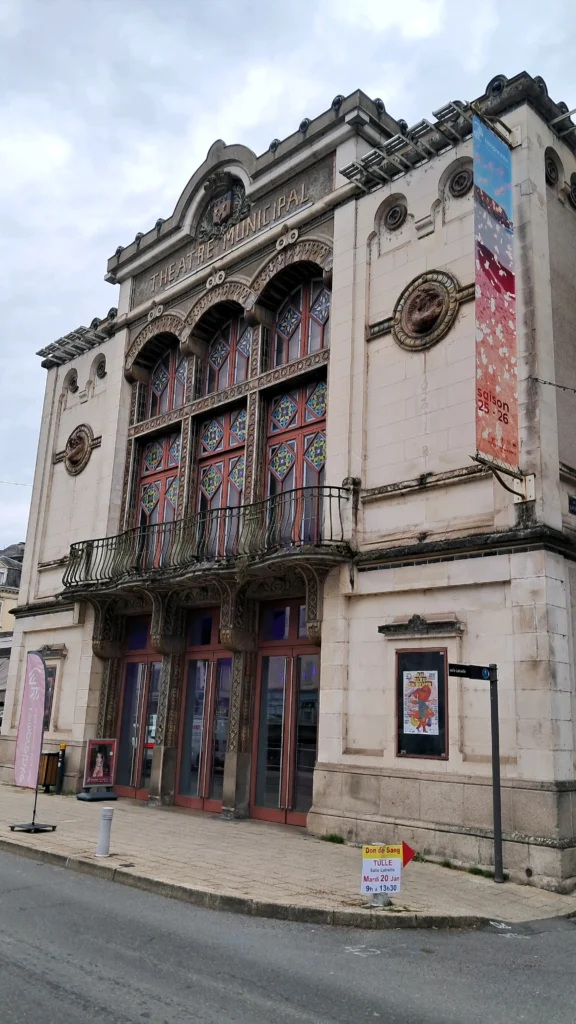
Built between 1899 and 1902, the theater was a radical experiment. The architect, Anatole de Baudot, was a visionary who sought to solve a major problem of the 19th century: theater fires. At the time, theaters were built primarily of wood and stone, making them highly flammable.
De Baudot chose to use the Cottancin system—a primitive but brilliant form of reinforced concrete. This made the Tulle theater the first in the world to be constructed with a reinforced cement frame. It was a bold move that initially met with skepticism, but it stood the test of time, proving that concrete could be both functional and beautiful.
A Masterpiece of Polychromy
While the structural bones are industrial, the “skin” of the building is pure art. De Baudot utilized “architectural polychromy,” a style that uses different colored materials to create visual rhythm.
- The Facade: A vibrant mix of red brick, local sandstone, and intricate ceramics.
- Art Nouveau Details: The stunning ceramic decorations were crafted by Alexandre Bigot, a master of the Art Nouveau movement. These floral and geometric patterns give the building a delicate, organic feel that contrasts with its sturdy concrete core.
2. From Sacred Ground to the Silver Screen: A History of Transformation
The history of the theater is a reflection of the shifting tides of French society. The site has evolved through three distinct eras:
The Jesuit Origins
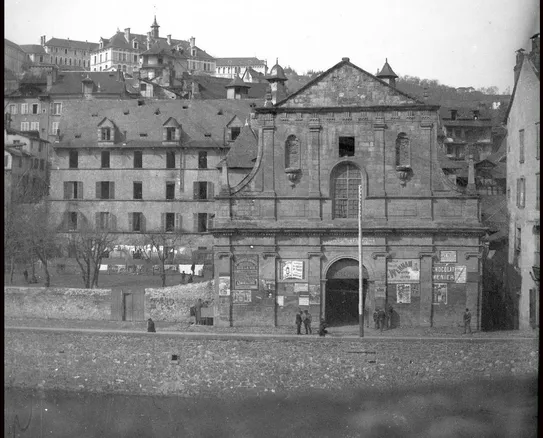
Long before the first stone of the theater was laid, the site was home to a 17th-century Jesuit chapel. Following the French Revolution and the subsequent secularization of education, the chapel fell into disuse. By the late 1800s, the local government, led by Mayor Jean Tavé, decided that the city needed a “Temple of Culture” to replace the religious temple of the past.
The “L’Eden” Cinema Era
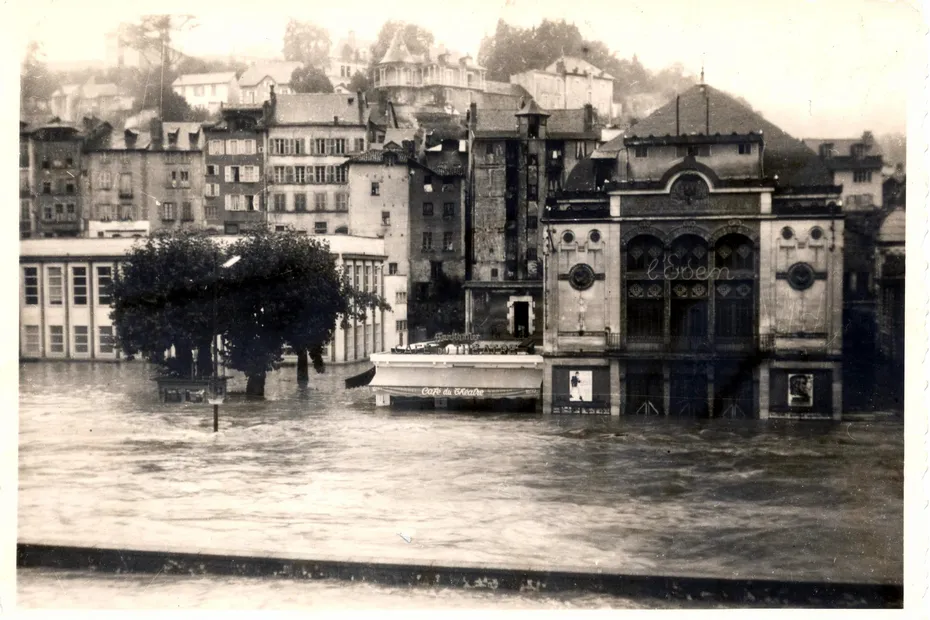
By the 1930s, live theater faced stiff competition from a new medium: film. In 1932, the building was renamed L’Eden and converted into a grand cinema. To make room for larger audiences and the projection equipment, much of the original “Italian-style” interior was modified. For over half a century, L’Eden was the social heart of Tulle, where residents gathered to watch everything from Charlie Chaplin to the French New Wave.
The Modern Rebirth
In the 1980s, the city recognized the historical value of the building. A massive restoration project was launched to return it to a live performance venue. In 1994, it reopened its doors, blending the historic 1902 facade with a modern, high-tech interior capable of hosting the most demanding contemporary productions.
3. L’Empreinte: The Pulse of Modern Performance
Today, the theater in Tulle doesn’t operate in isolation. It is part of L’Empreinte, a prestigious Scène Nationale (National Stage). This is a unique collaboration between the cities of Tulle and Brive-la-Gaillarde.
Why the “National Stage” Status Matters
The French Ministry of Culture grants this label only to venues that demonstrate excellence in three areas:
- Artistic Creation: Supporting new plays, dance pieces, and musical compositions.
- Diffusion: Bringing world-class touring shows to rural regions.
- Public Access: Ensuring that culture is affordable and accessible to all citizens, regardless of their background.
When you attend a show at the Théâtre de Tulle today, you might see a contemporary dance troupe from Lyon, an experimental theater group from Paris, or a world-renowned jazz ensemble.
4. More Than Just Drama: Unique Events and Traditions
The theater is a versatile space that hosts events far beyond traditional plays:
- Nuits de Nacre (The Pearly Nights): Tulle is the world capital of the accordion. Every year, this festival takes over the city, and the theater becomes the primary venue for gala concerts. It’s a magical experience to hear the “soul of the city” (the accordion) resonating through the world’s first concrete theater.
- Political and Social Gatherings: Since its inception, the theater has been a “civic house.” It remains a place for public debates, lectures, and community celebrations, maintaining its role as the city’s secular town square.
5. Planning Your Visit: Tips for the Art-Loving Traveler
If you are planning to visit Tulle to experience its theatrical life, keep these points in mind:
- The Best Views: For the best photos, stand on the opposite bank of the Corrèze River at sunset. The reflection of the illuminated Art Nouveau facade in the water is breathtaking.
- Tickets: Shows often sell out, especially during the Nuits de Nacre or the summer festival Tulle l’Eté. Check the L’Empreinte official website for schedules.
- Language: Even if your French is limited, look for “Nouveau Cirque” (modern circus) or dance performances. These are highly visual and transcend language barriers.
Conclusion: A Living Legacy
The theater in Tulle is a testament to the fact that history is not static. It is a building that has survived wars, economic shifts, and changes in technology—moving from a chapel to a concrete experiment, then to a cinema, and finally back to a theater. It stands as a symbol of Tulle’s resilience and its unwavering commitment to the arts.
Whether you are an architecture enthusiast, a history buff, or simply a traveler looking for a unique cultural experience, the Théâtre de Tulle is a must-visit destination in the heart of France.